The images below are taken from the collection of Stephen Roberts.
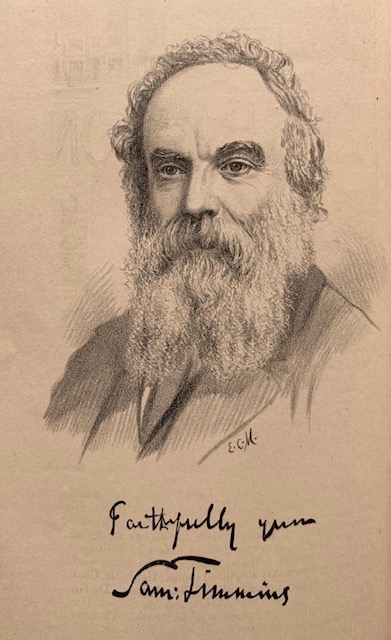
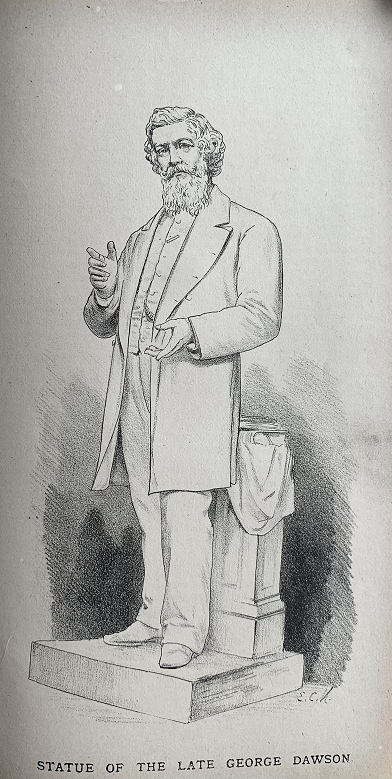
'He loved his books, his home and his friends', reads the inscription on the headstone of the antiquarian and devotee of Shakespeare Sam: Timmins in Key Hill Cemetery, Birmingham. The world-famous Shakespeare Library, opened in Birmingham to mark the tercentenary of Shakespeare's birth in 1864, was Timmins' idea.This statue of the great and much-loved preacher George Dawson stood in the centre of Birmingham until it was removed - and, astonishingly, destroyed - during the 'modernization' of the city which followed the Second World War.
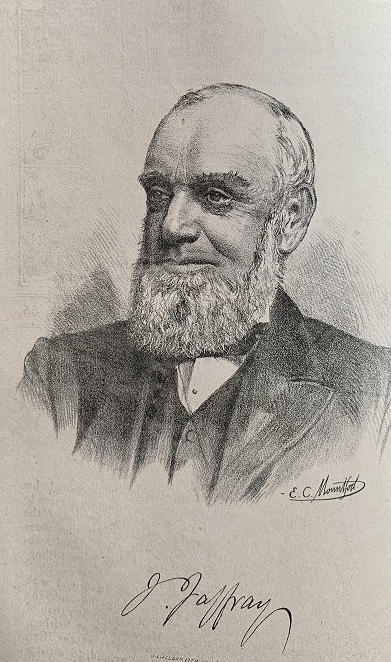
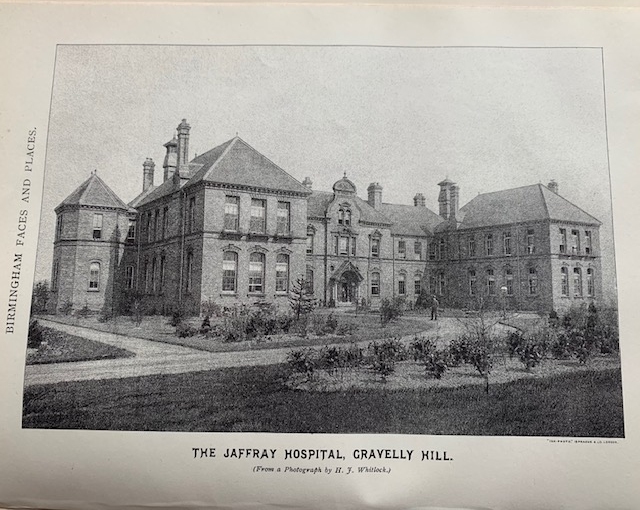
When he arrived in Birmingham in 1844 John Jaffray had just £20 in his pocket, but he died a half century later a man of immense wealth. The proprietor of the Birmingham Daily Post and with sizeable investments in banking and coal mining, he was a notable philanthropist.Opened in September 1885, the Jaffray Hospital in Gravelly Hill catered for chronically-ill patients. John Jaffray purchased the site and funded entirely the building and equipping of the hospital.
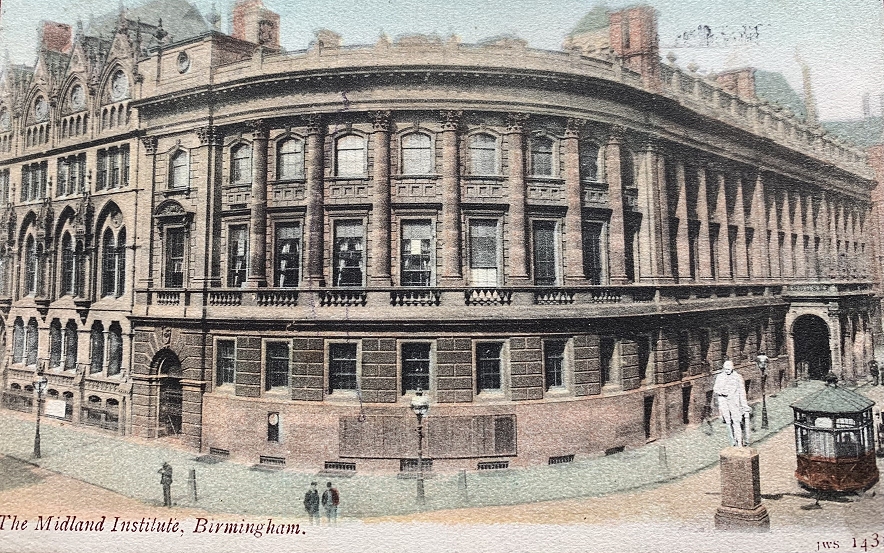
The Birmingham and Midland Institute, founded in 1853, could be described as the powerhouse behind the civic gospel. All of the leading civic gospellers were involved with it, teaching classes for working people in English language, English literature, history, mathematics, physics, chemistry and botany.
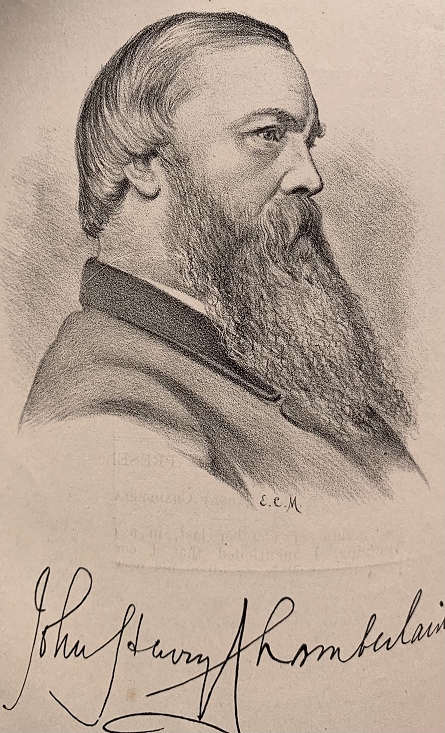
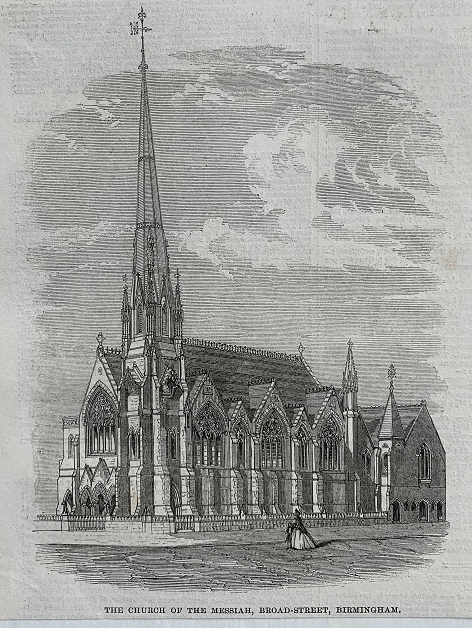
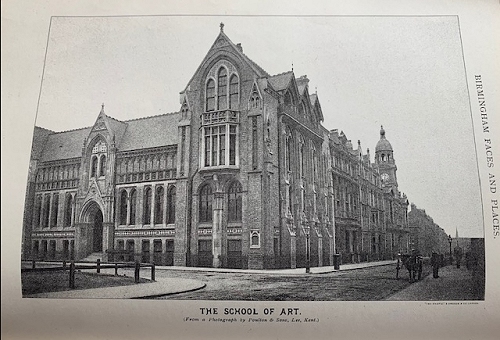
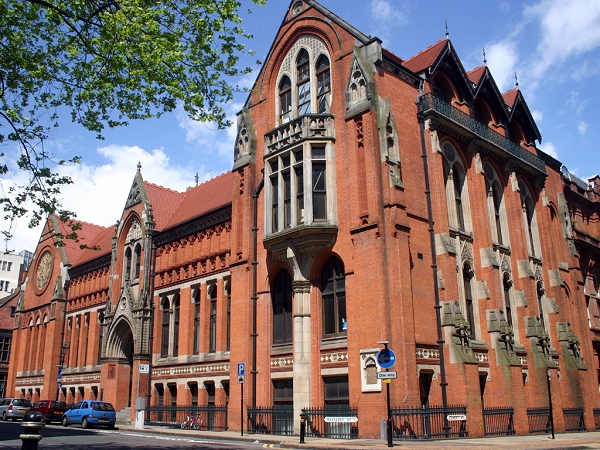
Quite literally the architects of the civic gospel, John Henry Chamberlain and his business partner William Martin designed, in their favoured Gothic red brick style, the board schools, hospitals, baths and fire stations that were built across Birmingham from the early 1870s onwards. The magnificent School of Art (1881) is their masterpiece.Located in Broad Street & built on arches over a canal, the Church of the Messiah was a Unitarian place of worship, opened in January 1862. Its minister Henry William Crosskey was one of the most energetic champions of the civic gospel, thinking nothing of addressing three meetings a night at election times. With his wife Hannah he also worked hard for women's suffrage.
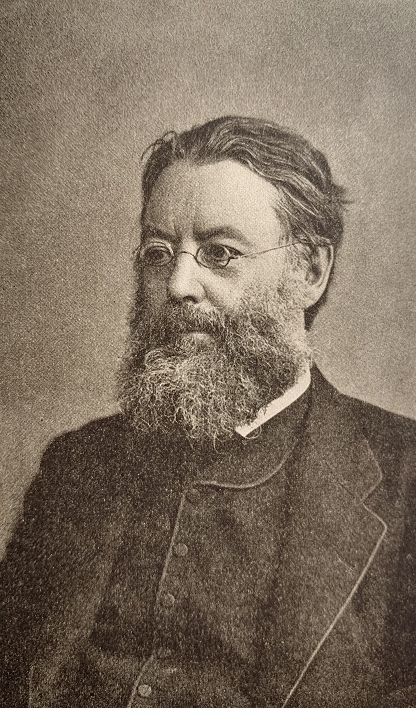
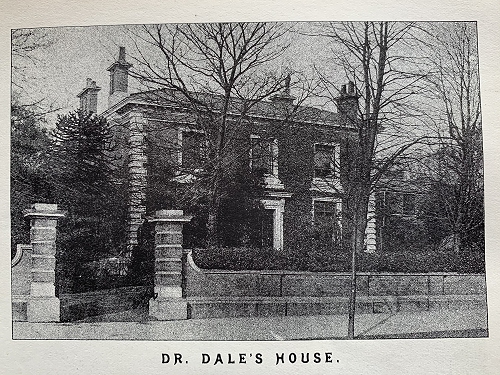
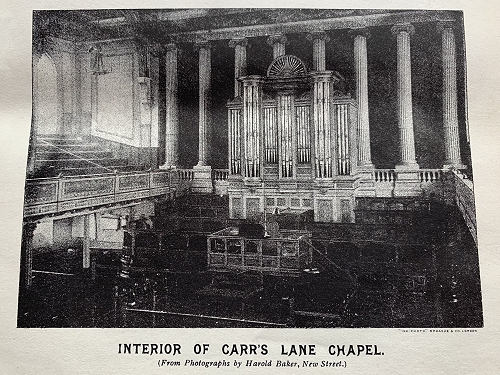
'God's commandments covered their municipal life …', Robert William Dale proclaimed and his sermons at Carr's Lane Chapel provided the ethical underpinning for the civic gospel.Winterslow House, Bristol Road, Birmingham, where R.W. Dale lived from 1868 until his death in 1895.
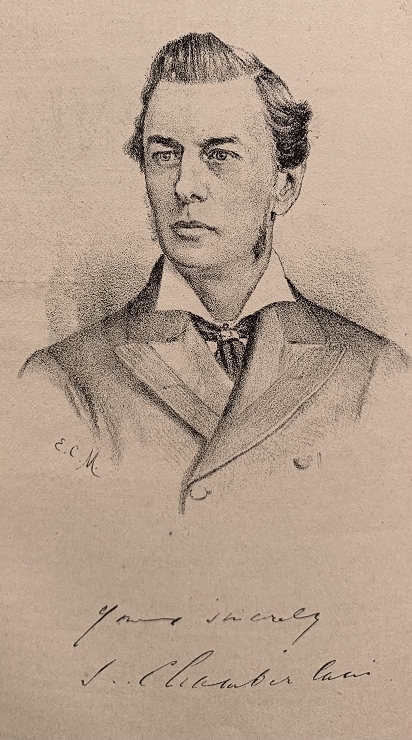
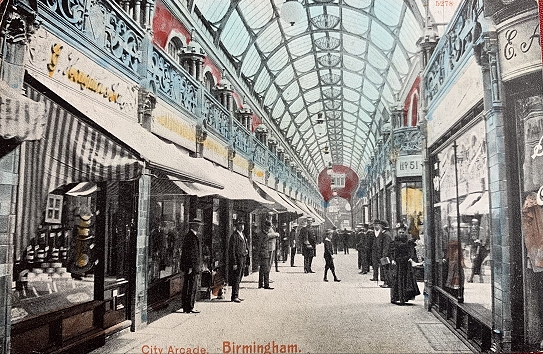
During the famous mayoralty of Joseph Chamberlain (1873-6) Birmingham was 'parked, assized, marketed, Gas-and-Watered and improved - all as the result of three years' active work.' Chamberlain was soon to become the most charismatic politician of his day.City Arcades, a very profitable enterprise for Birmingham investors.
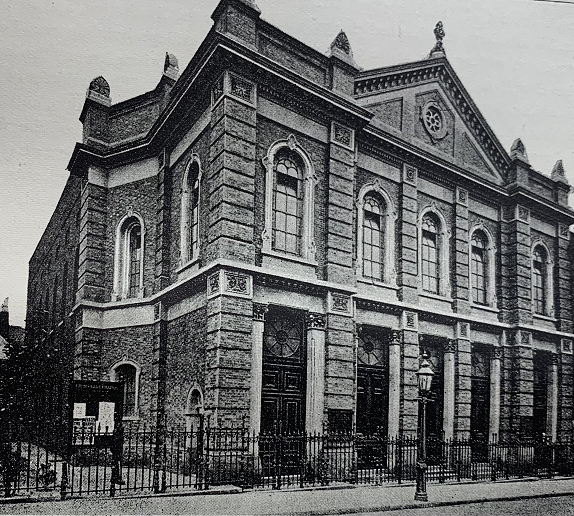
The Carr's Lane Chapel was built in 1819 and refurbished in 1871. R.W. Dale succeeded another celebrity preacher - John Angell James, whose book The Anxious Enquirer was a best-seller.After its refurbishment the Carr's Lane Chapel was capable of accommodating 2,000 people. It became the pre-eminent place of worship for Nonconformists after the death of George Dawson in 1876 and the slow decline thereafter of his Church of the Saviour.
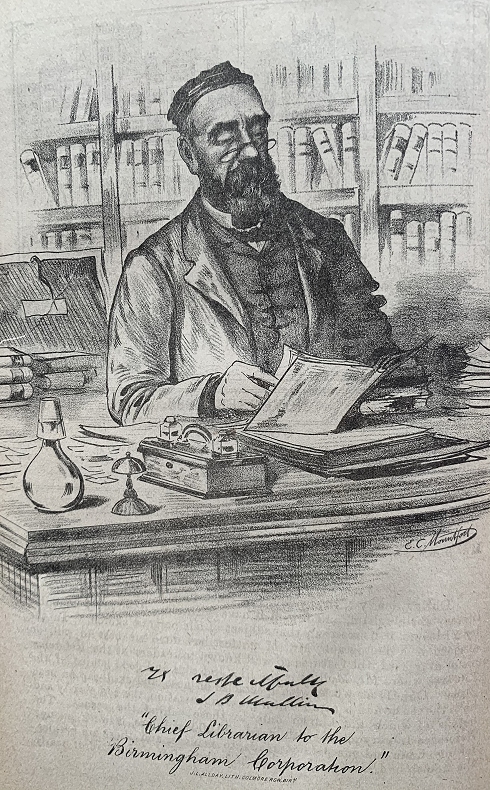
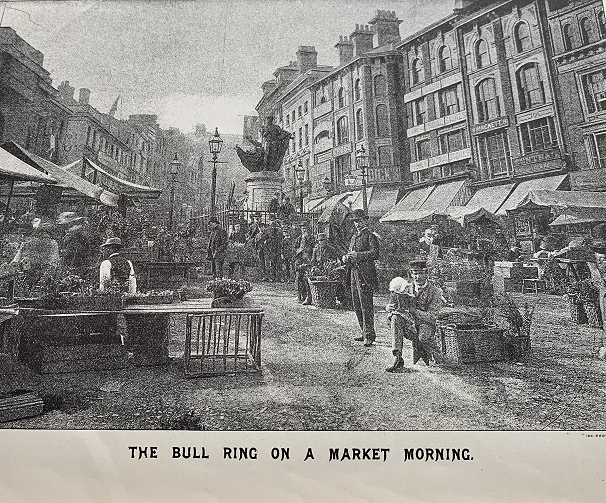
This lovely depiction of John Mullins Davis captures perfectly this bookish man. It was Davis who built up and catalogued the magnificent collection housed in the town's free reference library. When the library acquired a copy of the First Folio, it was Mullins who very appropriately stamped it as belonging to the reference library. In that one act, the essence of the civic gospel was captured.Birmingham's famous retail market in c. 1890. It is a shame that this interesting photograph is not of better quality.
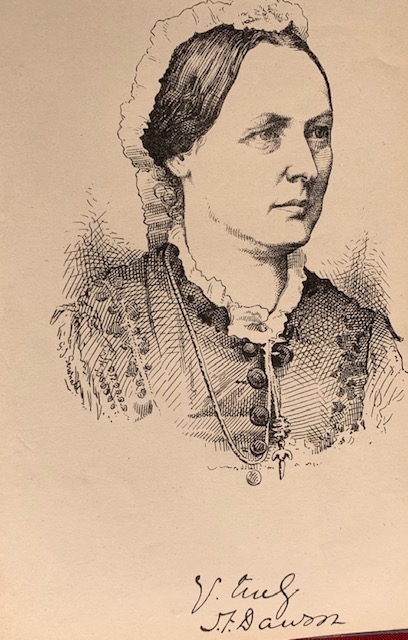
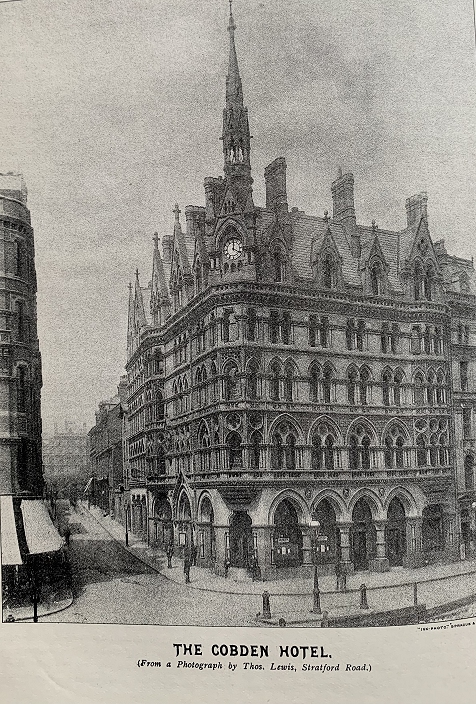
George Dawson married Susan Crompton in 1846: 'if any subject was discussable, she would discuss it … she always had something brilliant to say about it.'With 120 bedrooms, the Cobden Hotel opened in May 1885 at a cost of £20,000. It was a temperance hotel. Richard Cobden did not have a particular association with Birmingham, but he was a great inspiration to the men of the Birmingham Coffee House Company who owned the building.
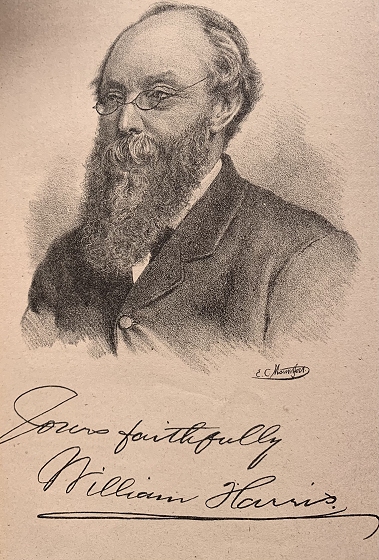
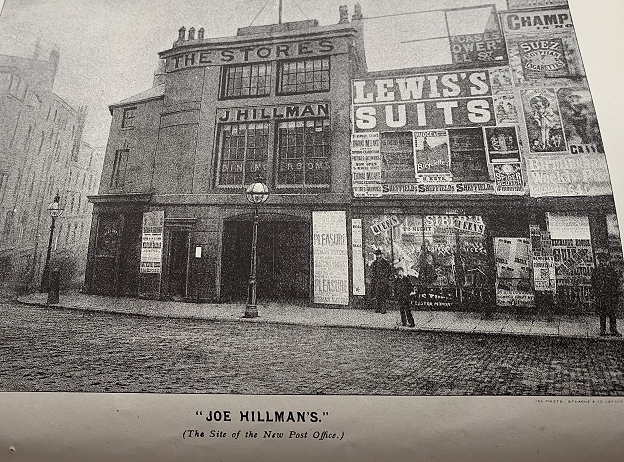
George Dawson believed that the interior of the Church of the Saviour should be richly decorated and not simply whitewashed as most Nonconformist chapels were. The man he chose to undertake this work was the architect William Harris, who refused payment but did accept the works, in seventeen volumes, of Dawson's great friend Thomas Carlyle.From 1862 until it was demolished in 1890, the establishment of Joe Hillman was a very popular meeting place in Birmingham. It had sawdust on the floors and Hillman was able 'to draw ale into five glasses held at once in one hand, an achievement at which he had no rival.'
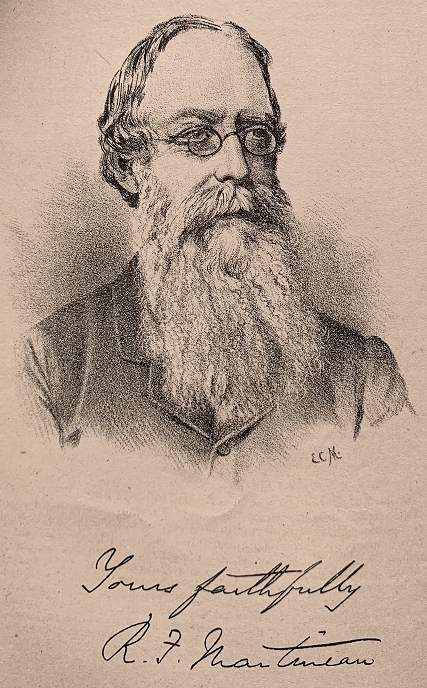
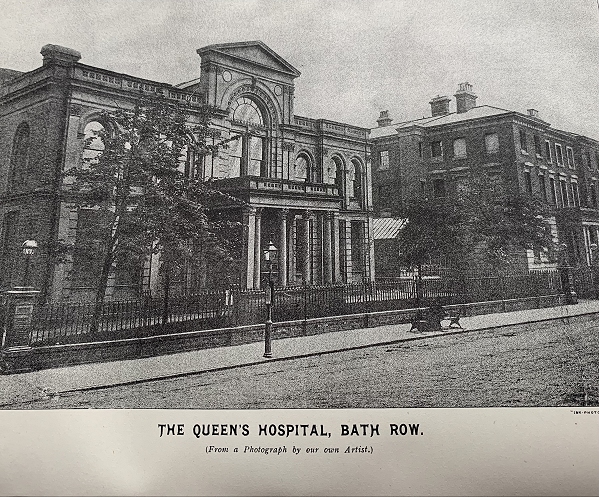
A member of an illustrious family - the writer Harriet Martineau was his aunt - Robert Francis Martineau was the driving force behind the Birmingham and Midland Institute. By the early twentieth century this institution had over 2,000 members.Funded by subscriptions, the Queen's Hospital in Bath Row opened in October 1841. It treated both in-patients - at first 130 of them - and out-patients. It subsequently acquired an adjacent rectory and new buildings and by 1878 there were beds for 1,600 patients and the capacity to treat 14,000 out-patients. From 1876 treatment was free.
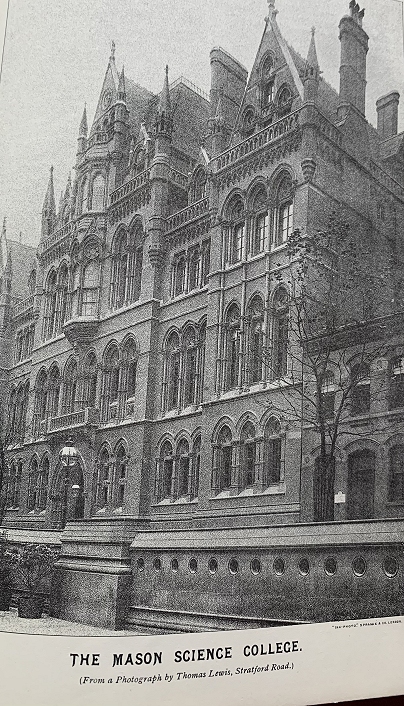
Birmingham's great newspaper editor, J. Thackray Bunce edited the Birmingham Daily Post for thirty six years. A hugely important opinion-shaper, the paper never wavered in its support for Joseph Chamberlain.Mason Science College was founded in 1875 by Josiah Mason, the pen manufacturer and philanthropist. It was the predecessor of the University of Birmingham. The building was demolished in 1964.
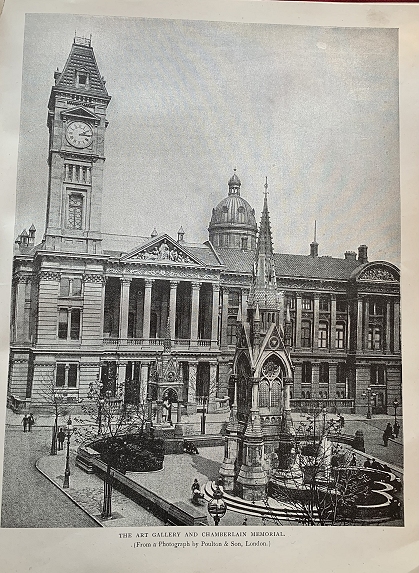
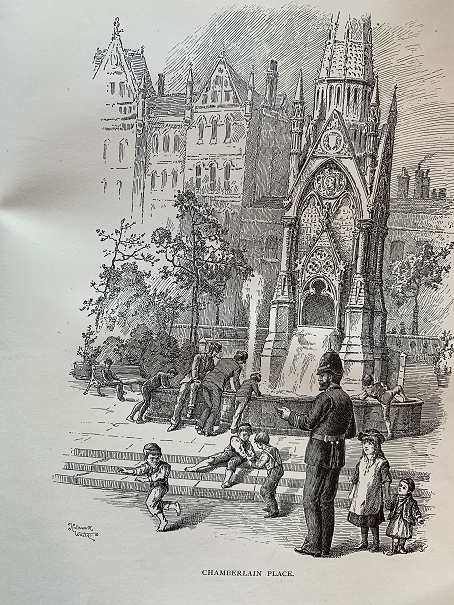
Birmingham paid tribute to its famous mayor with the opening in October 1880 of Chamberlain Square. The sixty-five feet tall white Portland stone fountain was designed by J.H. Chamberlain. The cost of £2,000 was raised by subscriptions. This scene depicted in this photograph - and many others - became the iconic view of Victorian Birmingham.In this image the sun is shining, children are playing and a friendly police officer is chatting to them. Actually it poured with rain on the day of the opening ceremony. The inhabitants of Birmingham soon had a nickname for their new fountain - Squirt Square.
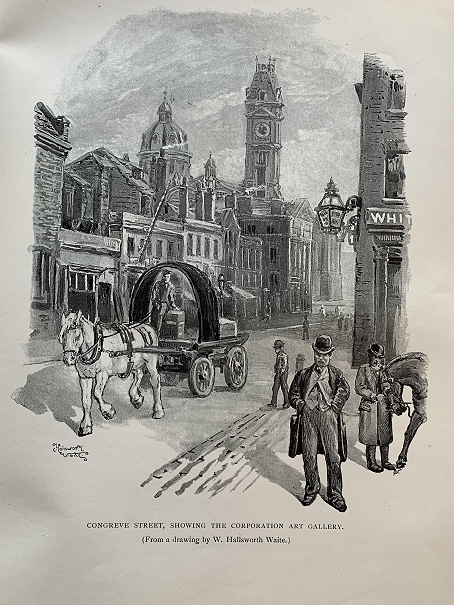
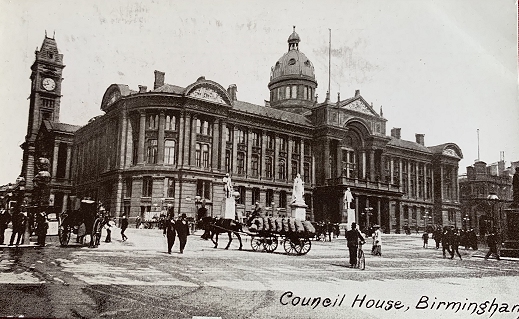
This image of Congreve Street depicts the municipal art gallery opened in November 1885. The civic gospel embraced the notion that beautiful art should be available for all to enjoy. On the first day 25,630 local people visited the new art gallery.Designed by H.R. Yeoville Thomason and erected in 18874-9, the Council House was the most important civic building in Birmingham - and looked it!
Opened in September 1885, the School of Art was the first such institution to be municipally-owned in the country. Offering classes in the day and the evening, it purposely reached out to the working people and young women of the town. This photograph does not do justice to what is unquestionably one of the most beautiful buildings in Birmingham.But this one does!
Birmingham School of Art. This photograph has been released into the public domain.